

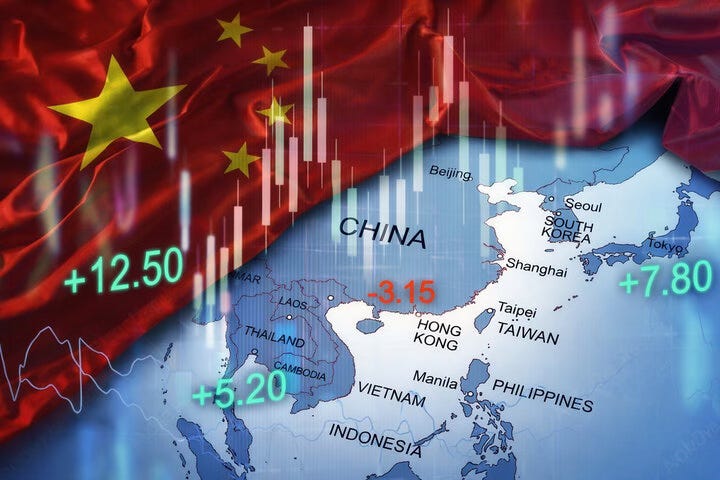
On 24 March 2026, the Philippines declared a state of national energy emergency as geopolitical disruption collided with supply chain fragility. Conflict in the Middle East tightened flows through the Strait of Hormuz, while Chinese refiners curtailed exports to secure domestic supply (BBC, 2026; Reuters, 2026a; Philippine News Agency, 2026; Modern Diplomacy, 2026).
The system did not collapse.
But it tightened, and it remains under pressure.
This distinction is analytically important. System collapse is observable and immediate. System tightening is gradual, diffuse, and often misinterpreted until secondary effects begin to accumulate. It manifests through delays, cost escalation, and decision latency, symptoms of a system operating under constraint rather than failure.
This is not a retrospective analysis. It is an assessment of a system operating within an ongoing disruption.
The Assumption of Continuity
ASEAN’s economic expansion has been underpinned by a largely implicit assumption of continuity in energy availability and maritime mobility. Fuel flows, shipping routes, and labour movement have been treated as stable inputs into system design rather than variable constraints.
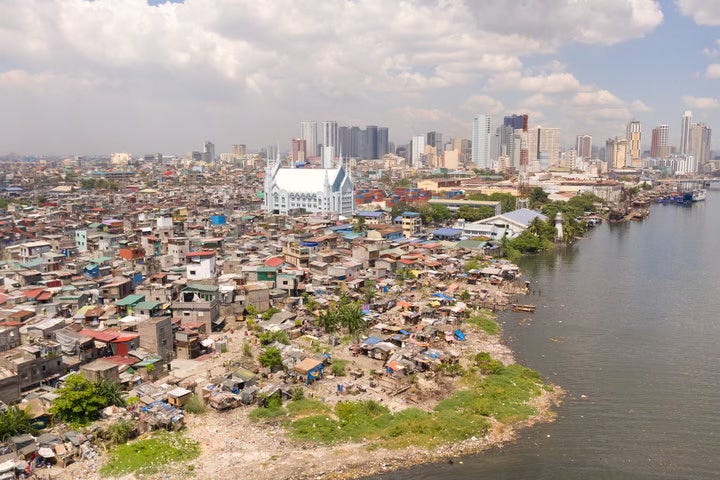
In the Philippine context, this assumption is structurally embedded. As an archipelagic state, economic activity is dependent on inter-island connectivity, itself reliant on consistent fuel supply. Energy functions not merely as an industrial input, but as a systemic connector linking production, distribution, and labour mobility.
At the point of emergency declaration, national fuel reserves were estimated at approximately 45–53 days for refined products, with crude reserves extending further (New York Times, 2026; Al Jazeera, 2026; Manila Bulletin, 2026). While sufficient to prevent immediate disruption, such reserves provide limited insulation against prolonged geopolitical supply constraints.
Sustained uncertainty at this level begins to alter behaviour, operational, commercial, and social.
From Discrete Event to Structural Condition
Traditional risk frameworks continue to conceptualise disruption as episodic, bounded in time and followed by recovery.
However, the 2026 energy shock reflects a broader structural shift. The vulnerability of the Strait of Hormuz, combined with the strategic use of export controls by major economies, signals a transition towards a more contested and politicised energy environment (IEEJ, 2025; Asia House, 2026; Reuters, 2026b).
In such an environment, disruption ceases to be an external shock and becomes an operating condition.
This reframes the core resilience question. It is no longer centred on recovery timelines, but on whether organisational systems are designed to function under sustained constraint.

Manifestations of Constraint: Operational and Human
At the macro level, energy disruption is typically analysed through pricing, supply levels, and market response.
At the operational level, its effects are more granular.
Fuel constraints translate into increased transport costs, reduced logistics reliability, and extended delivery timelines. For organisations, this introduces margin compression, contractual exposure, and operational inefficiencies.
At the human level, the impact is immediate and cumulative. Increased transport costs affect workforce mobility. Reduced mobility affects income stability. In geographically fragmented economies, such as the Philippines, these effects are magnified by dependence on inter-island transport networks.
These are not singular points of failure, but distributed pressures. Their significance lies in accumulation rather than intensity.

The Limits of Current Preparedness Models
Many organisations operating in ASEAN demonstrate maturity in compliance-based risk management. ISO-aligned frameworks, documented risk registers, and business continuity plans are widely implemented (PIDS, 2023).
However, these systems are predominantly calibrated for short-duration, localised disruptions. They assume eventual reversion to baseline conditions.
The Philippine case exposes the limitations of this assumption.
Under conditions of sustained constraint, the primary challenge is not plan activation, but situational interpretation. Organisations must continuously assess how evolving supply conditions translate into operational capability.
Key questions emerge:
What level of activity can be sustained under partial fuel availability?
Which functions degrade first, and what are the second-order effects?
At what point do operational compromises introduce safety or reputational risk?
In many cases, these questions are not pre-defined. As a result, they are addressed reactively, reducing decision speed and increasing systemic exposure.

Operating in the Space Between Stability and Disruption
The Philippine energy emergency remains ongoing. Supply flows persist, but under constraint. Prices remain volatile. Strategic buffers are finite, and external dependencies continue to introduce uncertainty (Gulf News, 2026; PowerPhilippines, 2026; Reuters, 2026a).
This creates an intermediate operational state, neither stable nor fully disrupted.
It is within this space that resilience is most rigorously tested.
Organisations are required to manage progressive degradation rather than binary disruption. This involves prioritising critical functions, reallocating constrained resources, and absorbing inefficiencies over extended periods.
Such conditions demand continuous recalibration rather than discrete response.
Interdependence and Systemic Propagation
ASEAN’s regional integration has produced significant efficiency gains. However, it has also increased systemic interdependence across energy, logistics, and economic activity (ERIA, 2025; EU–ASEAN Business Council, 2025).
Under conditions of constraint, this interdependence accelerates the propagation of disruption.
Energy constraints impact transport systems. Transport disruptions affect production continuity. Production instability influences labour markets and income flows.
The system does not fail at a single node. It experiences distributed stress across multiple interconnected nodes simultaneously.
This diffusion of pressure complicates both detection and response.

Decision-Making Under Constraint
The limiting factor in such environments is not information availability, but decision-making capability.
Data on supply, pricing, and logistics is accessible. However, translating this information into coordinated organisational action requires clarity in authority, thresholds, and priorities.
Ambiguities in governance structures, particularly around escalation triggers and decision rights, become critical vulnerabilities under pressure (BBC, 2026; Reuters, 2026a; Philippine News Agency, 2026).
Where these parameters are not pre-defined, organisations experience decision latency, increasing operational risk.
Reframing Resilience as Operational Capability
The Philippine energy emergency highlights a fundamental distinction between preparedness and capability.
Preparedness is the existence of plans and frameworks.
Capability is the ability to execute under constraint.
Capability is developed through stress-testing systems against realistic conditions, identifying failure points, and rehearsing decision-making processes in advance.
It also requires acceptance that optimal outcomes may not be achievable under sustained constraint.
Resilience, therefore, is not the preservation of normal operations, but the maintenance of functional continuity as conditions deteriorate.

Conclusion: An Ongoing System Under Stress
The Philippine energy emergency remains unresolved.
Supply conditions are subject to continued geopolitical volatility. Export restrictions may persist or intensify. The system continues to operate within a narrow margin between stability and disruption (Reuters, 2026a; BBC, 2026; New York Times, 2026).
This is not a discrete event that can be analysed retrospectively. It is an ongoing operational condition.
For organisations across ASEAN, the implication is immediate.
Resilience must be evaluated not against hypothetical scenarios, but against current conditions.
The critical question is no longer whether disruption will occur, but whether systems are already capable of functioning within it.
And, more fundamentally, whether they were ever designed to do so.

Further reading:
PNA: PBBM declares state of nat’l energy emergency amid global supply risks — https://www.pna.gov.ph/articles/1271702
Modern Diplomacy: China’s Fuel Export Freeze Deepens Asia’s Energy Shortage — https://moderndiplomacy.eu/2026/03/17/chinas-fuel-export-freeze-deepens-asias-energy-shortage/
PNA: PBBM orders release of P20-B emergency fund to secure PH fuel supply — https://www.pna.gov.ph/articles/1271722
Biz groups back state of national energy emergency declaration — https://www.pna.gov.ph/articles/1271806
Oil firms assure supply as PBBM orders action vs. price shocks — https://www.pna.gov.ph/articles/1270980
PBBM directive on energy conservation takes effect in Albay offices — https://www.pna.gov.ph/articles/1270610