


Resilience is now one of the most commonly used words in business. It appears in annual reports, board risk statements, business continuity strategies, and enterprise-wide transformation programmes. Organisations frequently cite alignment with recognised standards such as ISO 22301 and ISO 31000, and many can demonstrate mature governance, audit trails, and formal escalation structures.
Yet disruption continues to expose a persistent organisational weakness:
the difference between being compliant and being capable.
This is the point PillarsGlobal exists to address.
Because resilience is not proven through documentation. It is proven through performance.
In operational terms, resilience is not what an organisation intends to do. It is what it is able to do when conditions become constrained,
when information is incomplete, time is compressed, leadership attention is divided, systems degrade, and people operate under fatigue.
That is why PillarsGlobal frames resilience as a performance system rather than a compliance function.

Resilience fails most often at the moment organisations need it most
When organisations break down under pressure, the failure is rarely the absence of a plan. Most have plans. Most have structures. Most have trained personnel. Most have reporting pathways and escalation matrices.
The failure is typically more subtle and more damaging:
the organisation loses coherence.
Decision-making becomes fragmented. Multiple narratives compete. Escalation becomes hesitant. Local workarounds multiply. Authority and accountability separate. Operational tempo slows. People become reactive, not deliberate.
At that point, the organisation is not “failing to follow the plan.”
It is experiencing the reality that the plan was written for stable conditions, while disruption is defined by instability.
This is the gap between work-as-imagined and work-as-done, the difference between how the organisation believes it operates, and how it actually operates when exposed to real constraints.
PillarsGlobal treats that gap as the central problem of resilience.
Because the size of that gap determines whether a disruption is absorbed, managed, or allowed to cascade.
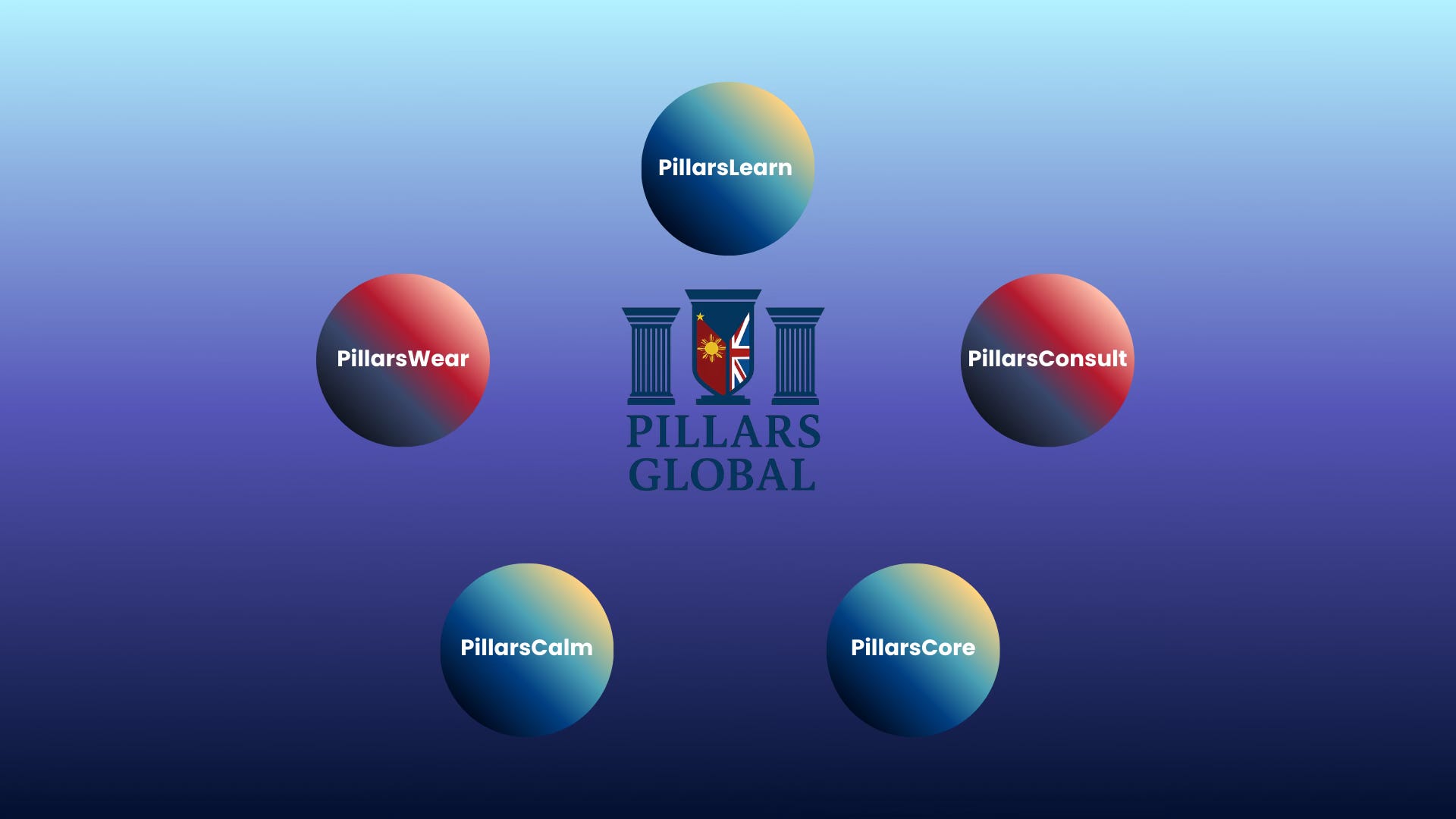
PillarsGlobal’s position: resilience is built through five interacting capabilities
Many resilience models treat the topic as a single discipline - usually owned by risk, business continuity, security, or governance. The problem with this approach is that resilience failure is rarely caused by a single weakness.
It is usually systemic.
PillarsGlobal is structured around five pillars because resilience performance is the result of interacting capabilities that either reinforce one another or collapse together under stress.
The five pillars are not branding. They are an operating model.
PillarsLearn exists because resilience is not retained through awareness; it is retained through conditioned decision-making. Under pressure, people do not “rise to the plan.” They revert to what they have rehearsed and what they trust. Training that does not test judgement under constraint, produces confidence without capability.
PillarsConsult exists because resilience is not improved through policy expansion. It is improved through system redesign. The most valuable resilience work is often found in identifying the operational weak points that force workarounds, then redesigning the system so performance is sustainable under stress, not heroic, not fragile, and not dependent on individual competence alone.
PillarsCore exists because control is not created by visibility. Modern organisations often invest heavily in dashboards, reporting systems, and situational awareness tools. But observation is not control. Control exists where the organisation can detect meaningful change early, interpret it correctly, and convert intent into action at the right level. When decision-flow fails, organisations stall even while they can see the crisis unfolding.
PillarsCalm exists because human performance is not a constant. Most corporate resilience programmes implicitly assume stable cognition and stable behaviour. In disruption, cognitive bandwidth reduces, attention narrows, fatigue increases error rates, and communication quality degrades. If resilience design ignores cognitive load, it will fail precisely when it is required most.
PillarsWear exists because identity and culture are not “soft factors.” They are operational assets. Under pressure, teams do not coordinate because the policy says they should. They coordinate because trust, belonging, and shared identity reduce friction and increase cooperation. Organisations with weak identity fragment faster under stress. Organisations with strong identity hold the line longer.
This is why PillarsGlobal does not treat resilience as a document. It treats resilience as a system.
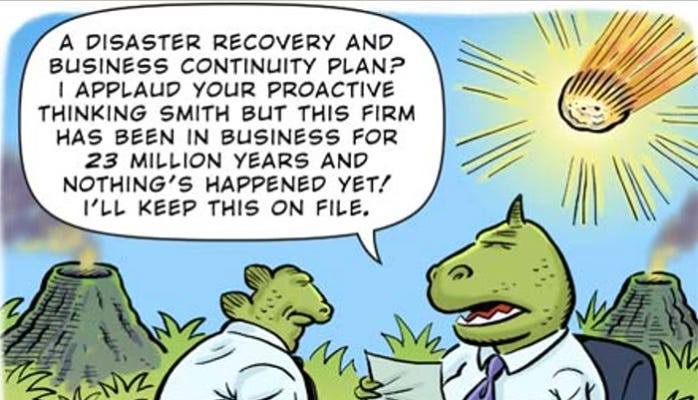
The compliance trap: when assurance replaces operational truth
Standards-based frameworks are valuable when applied correctly. They provide governance discipline, repeatable processes, and continual improvement structures. PillarsGlobal does not reject standards; it builds on them.
However, a common failure mode across industries is the drift from capability-building into assurance production, what operational teams often recognise as “theatre.”
Theatre is not always intentional. It emerges because compliance is easier to evidence than capability.
It is easier to show that a plan exists than to prove that the organisation can execute under constraint. It is easier to run an exercise that validates the framework than to run an exercise that exposes operational weakness. It is easier to satisfy audit requirements than to face the discomfort of discovering that decision rights, escalation pathways, and leadership capacity do not function under pressure.
This is the difference between a resilience programme that looks mature and a resilience system that performs.
PillarsGlobal’s position is simple:
assurance is not resilience unless it translates into performance.
A definition that holds under pressure
PillarsGlobal defines resilience in operational terms:
Resilience is the capacity to sustain critical performance when operating conditions degrade.
This definition forces the conversation away from slogans and toward measurable capability:
Can the organisation maintain decision tempo when information is incomplete
Can it preserve operational coherence when leaders are overloaded?
Can it continue delivering critical outcomes when dependencies fail?
Can it recover function faster than disruption can cascade?
Resilience is not a department. It is a business capability that determines whether a firm adapts and continues delivering value, or becomes trapped in reactive cycles that erode performance, confidence, and credibility.
What this Sub-stack will deliver
The Resilience Briefing exists to close the gap between resilience as language and resilience as execution.
Each issue will take a real operational problem, decision flow, escalation failure, cognitive overload, control architecture, organisational fragility, and break it down through the PillarsGlobal system so the reader can translate insight into action.
Not in theory. In practice.
Because the final test of resilience is not what an organisation can explain.
It is what it can do when the pressure is real.
— Steve Flaherty
PillarsGlobal