

Abstract
This paper examines the analytical sufficiency of combining RAMP (Routes, Areas, Movement, Profile) and DIM-ICE (Design, Information, Management across Ingress, Circulation and Egress) as complementary quantitative and qualitative frameworks in contemporary crowd safety management. It argues that recent practitioner-driven temporal expansions of these models, explicitly segmenting crowd phases into Arrival, Last Mile and Dispersal, do not introduce new analytical variables beyond those already structurally accommodated within established crowd science doctrine. Drawing upon applied qualification development and operational leadership practice within the Kingdom of Saudi Arabia, this paper asserts that crowd safety remains fundamentally a physics-led discipline supported by systemic oversight. Analytical clarity and threshold precision, rather than framework proliferation, determine operational effectiveness.
1. Introduction
Over the past three months, I have been designing and delivering the pilot for the Highfield Accredited Level 5 Award in Advanced Crowd Safety Management and Operational Leadership as part of a broader qualification and development consultancy contract within the Kingdom of Saudi Arabia. This programme forms part of a wider capability uplift aligned with the General Entertainment Authority’s Vision 2030 objectives, particularly in relation to sector professionalisation, operational leadership maturity and localisation within the live events industry.
The development of an advanced-level qualification in crowd safety imposes a practical discipline: frameworks must be evaluated for analytical sufficiency rather than presentation strength. When stress-tested against operational realities, high-density ingress curves, transport interface congestion, heat-amplified fatigue and simultaneous mass egress, only those models that materially enhance detection capability and intervention timing remain defensible.
Within established crowd science doctrine, two frameworks have consistently demonstrated structural robustness:
RAMP (Routes, Areas, Movement, Profile), providing quantitative analysis of crowd mechanics and spatial capacity (Still, 2000).
DIM-ICE (Design, Information, Management across Ingress, Circulation and Egress), offering a qualitative systems-level diagnostic overlay (Still, 2014).
Used together, these frameworks provide layered redundancy: measurable spatial modelling combined with structured systemic evaluation. RAMP identifies density thresholds, flow limitations and geometric constraints; DIM-ICE evaluates how design integrity, communication clarity and operational posture influence behavioural stability within those physical limits.
Recent practitioner adaptations have expanded temporal segmentation by explicitly identifying additional phases such as Arrival, Last Mile and Dispersal. While operationally descriptive, this paper contends that such expansion does not introduce new measurable or behavioural variables beyond those already encompassed within the RAMP–DIM-ICE pairing.
The central proposition advanced here is therefore clear:
Crowd safety remains fundamentally a physics-led discipline supported by systemic oversight. Expanding phase labelling does not constitute analytical evolution unless new measurable dimensions are introduced.

2. RAMP: The Quantitative Foundation
RAMP provides a structured method for evaluating crowd mechanics through four interdependent dimensions:
Routes – corridor capacity and conflict points
Areas – holding capacity and density thresholds
Movement – flow rates and time-to-clear
Profile – behavioural loading and demographic modifiers
The model is grounded in empirical pedestrian flow research and density–velocity relationships developed in foundational studies of crowd dynamics (Fruin, 1971; Still, 2000).
Crowd incidents frequently begin when density exceeds tolerable limits or when flow collapses at geometric constraints (Helbing et al., 2000). These are measurable phenomena. They are not conceptual ambiguities.
RAMP therefore functions as a physics-based baseline.

3. DIM-ICE: Systemic Degradation Detection
DIM-ICE overlays three systemic variables:
Design – infrastructure integrity and layout adequacy
Information – communication clarity and wayfinding reliability
Management – operational posture, intervention timing and authority
Applied across Ingress, Circulation and Egress, the framework recognises that many incidents emerge not solely from extreme density, but from system degradation preceding collapse (Still, 2014).
Where RAMP measures structural capacity, DIM-ICE interrogates system performance.
This layered approach aligns with broader organisational risk theory, which emphasises redundancy and early degradation detection rather than reactive crisis response (Reason, 1997).
4. Temporal Expansion: Analytical Redundancy or Re-Labelling?
Recent practitioner adaptations have extended the event timeline into:
Arrival
Last Mile
Ingress
Circulation
Egress
Dispersal
From an operational planning perspective, such segmentation may assist inexperienced practitioners in visualising crowd lifecycle phases. However, analytically:
Arrival is pre-ingress route and area modelling under RAMP.
Last Mile is externalised route conflict and transport interface modelling.
Dispersal is extended egress beyond the perimeter.
No new physical variables are introduced.
No new behavioural variables are introduced.
No new decision thresholds emerge inherently from relabelling.
Unless additional measurable criteria accompany such expansion, analytical capability remains unchanged.

5. Redundancy, Simplicity and Operational Clarity
Risk engineering literature consistently demonstrates that system resilience depends on clarity of thresholds and defined authority structures, rather than conceptual proliferation (Reason, 1997).
Crowd safety failures typically stem from:
Ambiguous intervention triggers
Delayed management response
Misjudged density accumulation
Overconfidence in system absorption capacity
They do not arise because an event phase lacked nomenclature.
When RAMP and DIM-ICE are correctly integrated:
Quantitative detection identifies structural overload.
Qualitative diagnosis identifies behavioural and systemic degradation.
Together, they provide dual-layer resilience.
Model multiplication does not inherently increase safety. Threshold precision does.

6. From Framework to Capability: Where PillarsGlobal Supports Sector Maturity
If crowd safety is a physics problem first and a systems discipline second, then the question becomes:
Who is strengthening the foundations?
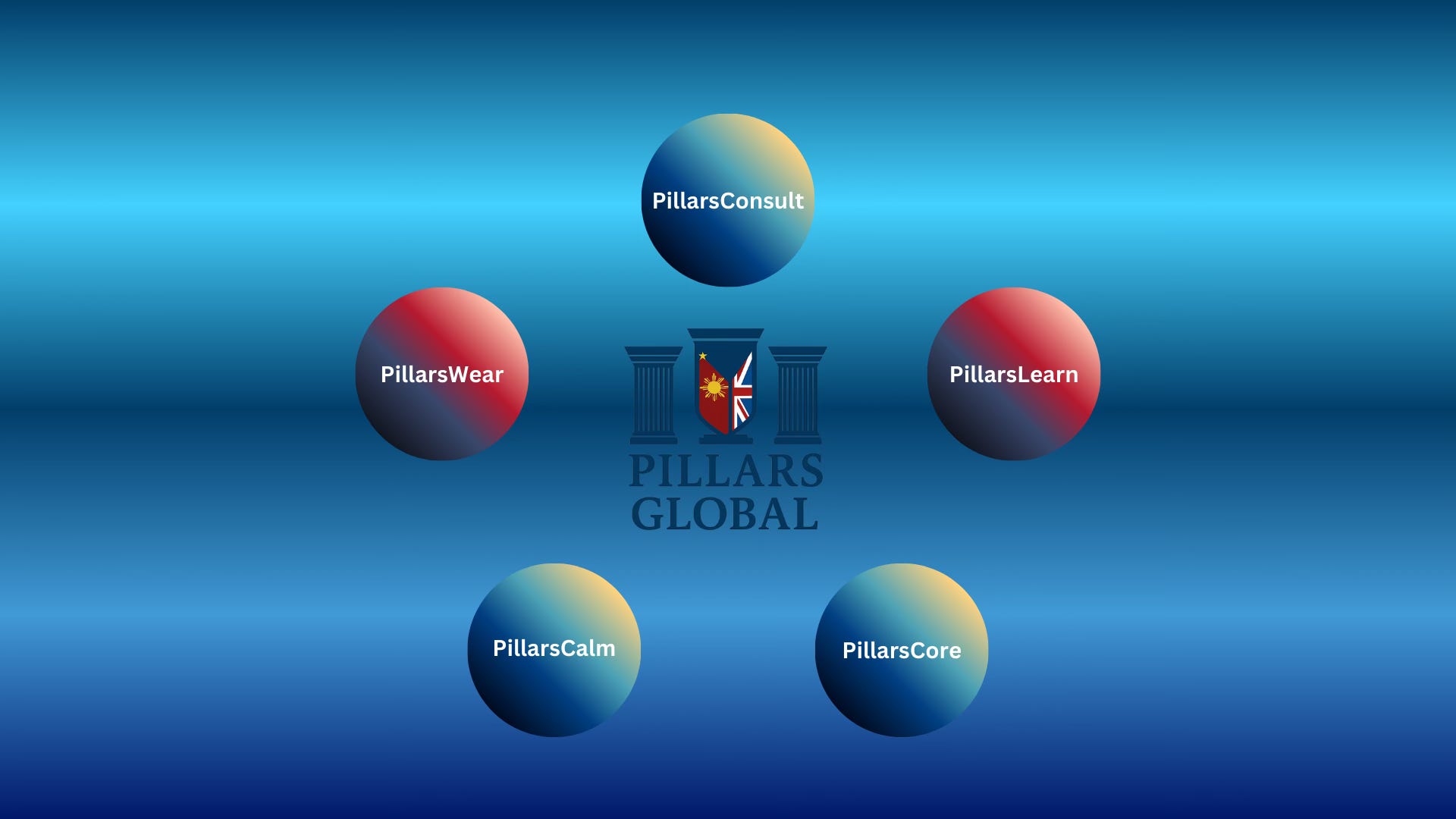
At PillarsGlobal, our work sits precisely at that intersection, turning structured doctrine into operational capability across five aligned pillars.
1️⃣ PillarsLearn – Capability Through Structured Education
We develop accredited qualifications and advanced training programmes that embed:
Quantitative crowd modelling (RAMP-aligned)
Systemic risk diagnostics (DIM-ICE aligned)
Decision-threshold clarity
Operational leadership maturity
Training is not theory delivery.
It is capability transfer under pressure.
2️⃣ PillarsConsult – Embedded Risk & Operational Integration
We support event organisers, venues and authorities in:
Density and flow validation
Dispersal architecture design
Command structure optimisation
Intervention trigger mapping
Authority and escalation frameworks
This moves organisations from compliance documentation to executable operational resilience.
3️⃣ PillarsCore – Integrated Risk & Decision Architecture
Crowd safety does not operate in isolation.
PillarsCore provides:
Structured risk scoring frameworks
Real-time situational awareness logic
Escalation thresholds
Decision-support architecture
It integrates crowd science into broader event safety and security ecosystems.
4️⃣ PillarsCalm – Leadership Under Pressure
Even the best model fails if leadership hesitates.
PillarsCalm develops:
Cognitive control under stress
Decisive command posture
Communication discipline
Authority confidence
Crowd safety is not just about geometry — it is about composure.
5️⃣ PillarsWear – Identity & Culture Alignment
Safety culture must be visible.
PillarsWear reinforces:
Professional identity
Leadership ethos
Team cohesion
Operational pride
Because disciplined systems require disciplined people.
Alignment with Event Safety & Security
Across major event environments — particularly within the Kingdom of Saudi Arabia’s Vision 2030 expansion — true maturity requires:
Physics-based modelling
System redundancy
Leadership clarity
Interoperability across agencies
Cultural professionalisation
PillarsGlobal aligns directly with those objectives.
We do not add letters.
We strengthen layers.
The future of event safety and security lies not in framework expansion, but in measurable capability uplift, and that is where we operate.
References
Fruin, J.J., 1971. Pedestrian Planning and Design. Metropolitan Association of Urban Designers and Environmental Planners.
Helbing, D., Farkas, I. and Vicsek, T., 2000. Simulating dynamical features of escape panic. Nature, 407(6803), pp.487–490.
https://www.nature.com/articles/35035023
Reason, J., 1997. Managing the Risks of Organisational Accidents. Aldershot: Ashgate.
Still, G.K., 2000. Crowd Dynamics. PhD thesis. University of Warwick.
Still, G.K., 2014. DIM-ICE Risk Assessment Framework.
https://www.gkstill.com/Support/WhyModel/dimice.html