

When analysts describe the 2026 Strait of Hormuz crisis, the focus usually falls on military developments: naval deployments, drone attacks on shipping, missile threats and the spectre of a maritime blockade (CSIS, 2026).
That framing is understandable, but it is incomplete.
What we are witnessing is something more complex: actuarial warfare at the world’s energy arteries. Rather than relying solely on direct military destruction, states and proxy actors are exploiting chokepoints, insurance markets and supply-chain fragility to disrupt the global economy.
In this environment, the objective is not necessarily to sink ships.
It is to raise uncertainty and perceived risk to the point where insurers withdraw cover and commercial actors refuse to operate.
Once that threshold is crossed, trade can stop without sustained kinetic conflict.
LICREPH — a decision-led risk framework used in resilience and geopolitical analysis — helps explain why this strategy is now emerging so forcefully. Rather than analysing isolated incidents, LICREPH evaluates three interacting layers:
Structural threat pressure
System resilience and redundancy
Operational and human escalation dynamics
Viewed through this lens, the current crisis does not appear as a sudden shock. It looks more like the inevitable outcome of two decades of structural under-investment in geopolitical resilience (UNCTAD, 2026; Alvarez & Marsal, 2026).
What this means in plain terms
Three structural realities now define the global energy system.
Strategic chokepoints are leverage points. Narrow maritime corridors increasingly function as geopolitical pressure valves.
Insurance markets have become part of the battlefield. When insurers withdraw coverage, trade can halt even without direct physical destruction.
The global energy system was built for efficiency rather than resilience. As geopolitical tension rises, its structural fragility becomes visible.
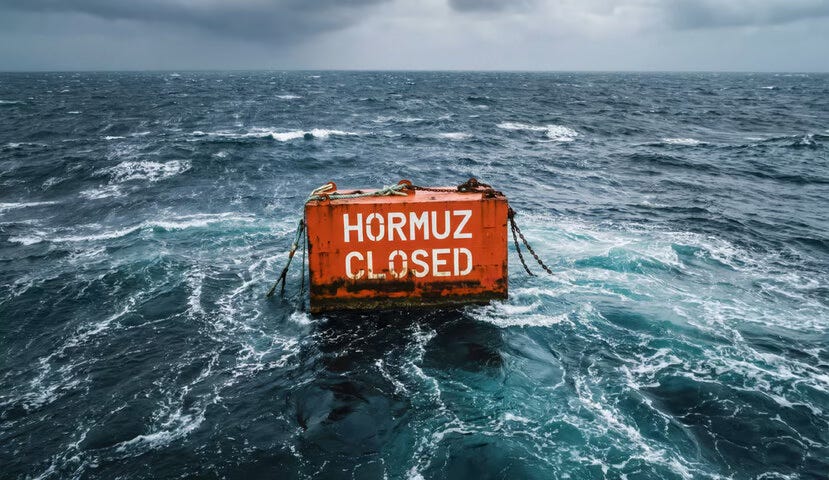
The Strait of Hormuz crisis is therefore not simply a regional confrontation.
It is a system-wide stress test of the global trading architecture.
The structural vulnerability we chose to live with
The scale of global dependence on a handful of maritime corridors has been clear for years.
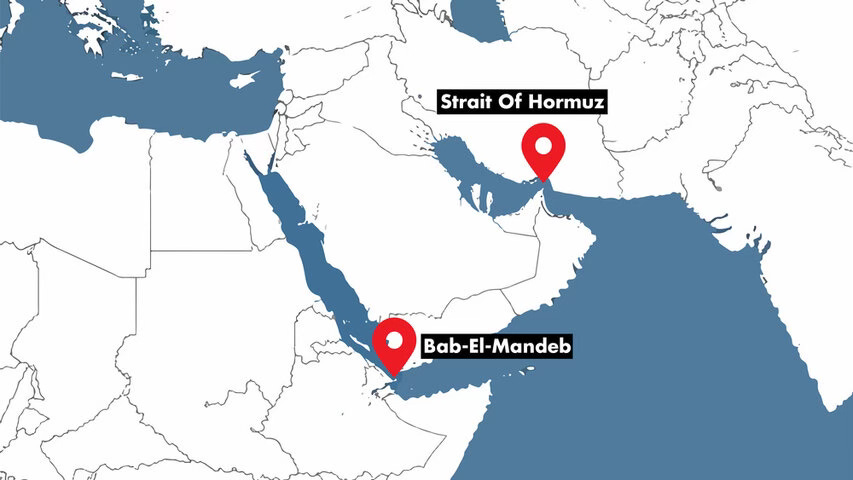
Roughly 20 percent of global seaborne crude oil, and a significant share of liquefied natural gas exports transit the Strait of Hormuz daily (EIA, 2026). Additional energy flows pass through the Bab el-Mandeb strait and the Suez Canal corridor, linking Gulf producers to European and Asian markets (UNCTAD, 2026).
Together these maritime chokepoints form the narrow bottleneck through which much of the global economy must pass.
Some redundancy infrastructure exists.
Saudi Arabia’s East–West pipeline allows crude to bypass Hormuz by transporting oil to the Red Sea port of Yanbu. Similarly, the UAE’s Habshan–Fujairah pipeline carries crude across the Emirates to the Gulf of Oman (Oxford Institute for Energy Studies, 2026; CSIS, 2026).
During the current crisis these pipelines are operating at near capacity as exporters attempt to redirect flows away from the strait (Kpler, 2026).
Yet these alternatives provide only partial relief.
Countries including Kuwait, Qatar, Bahrain and southern Iraq remain heavily dependent on Hormuz for energy exports. With limited alternative pipeline infrastructure or storage capacity, disruption to the strait can rapidly transform these states from major exporters into temporarily stranded producers (UNCTAD, 2026; Oxford Economics, 2026).
The structural picture is stark.
A large portion of global energy supply depends on a maritime corridor bordered by Iran, a state that has spent decades investing in asymmetric naval capabilities including anti-ship missiles, naval mines, drones and fast-attack craft designed specifically to disrupt shipping lanes (CSIS, 2026; EIA, 2026).
This vulnerability did not emerge suddenly.
It reflects decades of economic optimisation that prioritised efficiency and cost over resilience.
Why the LICREPH risk score is structurally high
The LICREPH framework reveals why the current crisis produces such severe systemic stress.
First, structural threat pressure has intensified. Attacks on tankers, drone strikes against shipping and repeated threats to close the strait have transformed a long-recognised vulnerability into an operational reality (CSIS, 2026; Oxford Institute for Energy Studies, 2026).
Second, system resilience remains limited. Alternative pipelines and longer maritime routes cannot easily replace the massive daily energy flows that typically pass through Hormuz (UNCTAD, 2026; EIA, 2026). Even when diversion is possible, it often increases transit times and costs dramatically.
Third, operational and human escalation pressure is extremely high. Governments, shipping firms, energy traders and insurers must make decisions under intense uncertainty and compressed timelines (Alvarez & Marsal, 2026; CSIS, 2026).
At the operational level, ship captains and chartering managers face a stark calculation: navigate through increasingly dangerous waters or halt operations entirely.
A single misjudgment could destroy a vessel, trigger geopolitical escalation or produce massive financial losses (Bloomberg, 2026; The Guardian, 2026).
When these three layers combine, the system moves into a persistent high-risk regime rather than a short-term disruption.
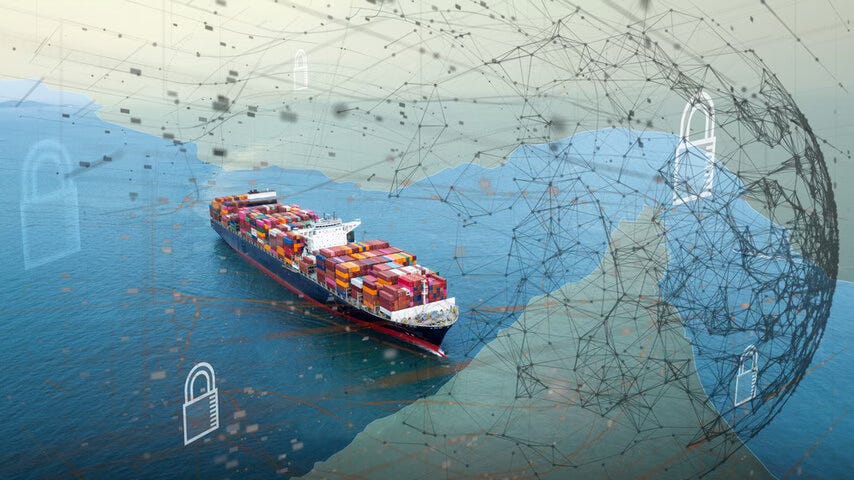
Insurance as a weapon
One of the most consequential developments in the crisis has occurred not on the water but within global insurance markets.
War-risk insurers and protection-and-indemnity clubs have begun withdrawing coverage for vessels operating in parts of the Gulf and surrounding waters (Bloomberg, 2026; Ship & Bunker, 2026).
This decision dramatically alters the economics of maritime trade.
When insurance coverage exists, voyages through dangerous regions can be priced accordingly. Elevated premiums compensate insurers while allowing shipowners to continue operations.
When coverage disappears entirely, the calculation changes.
Without insurance protection, a single attack can generate catastrophic losses across hull damage, cargo destruction, environmental liability and crew compensation (The Guardian, 2026; Alvarez & Marsal, 2026).
Under those conditions, rational shipowners simply stop sailing.
UNCTAD reports that tanker traffic through the region has already declined significantly as vessels delay departures or divert routes to avoid uninsured risk (UNCTAD, 2026).
This dynamic illustrates the concept of actuarial warfare.
Rather than relying solely on kinetic destruction, actors manipulate the perceived risk environment until insurers withdraw coverage and commercial activity collapses.
In effect, geography, military pressure and actuarial decision-making combine to disrupt global trade.
From a LICREPH perspective, removing insurance buffers simultaneously increases exposure, reduces resilience and intensifies human decision pressure.
The result is a dramatically higher systemic risk score.
Iran’s dual leverage
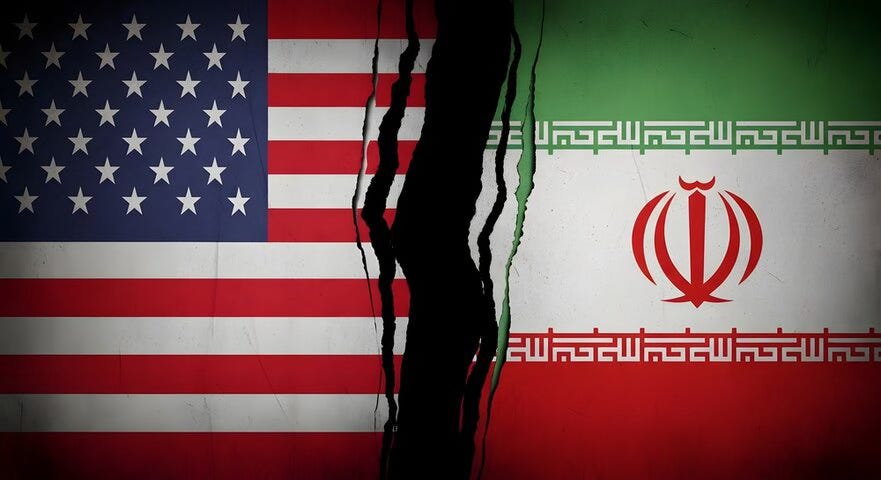
Iran occupies a uniquely powerful position within this strategic environment.
Geographically, it controls the northern edge of the Strait of Hormuz, giving it direct proximity to one of the world’s most critical maritime corridors.
At the same time, Tehran exerts indirect influence over the Red Sea corridor through its support for Houthi forces in Yemen, creating pressure at a second vital shipping gateway (Washington Institute, 2024; UNAV, 2024).
This dual leverage allows Iran to affect global trade at two critical maritime chokepoints simultaneously.
Compounding this is the opaque nature of Iran’s political decision-making system. Power within the Iranian state is fragmented across formal institutions, military organisations and clerical authorities, often making escalation thresholds difficult for external observers to interpret (Georgetown Security Studies Review, 2015; Brandeis Crown Center, 2025).
This ambiguity forces international actors to assume worst-case scenarios when evaluating risk.
Combined with geographical leverage, this uncertainty magnifies Iran’s strategic influence far beyond the size of its formal economy (Oxford Institute for Energy Studies, 2026; CSIS, 2026).
China’s financial influence
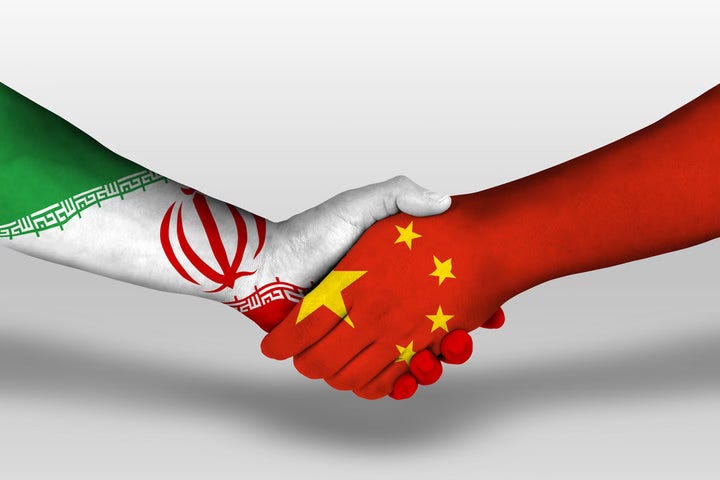
Overlaying these geopolitical dynamics is China’s expanding economic relationship with Iran.
The two countries signed a long-term strategic cooperation agreement covering energy investment, infrastructure development and technology partnerships (Al Jazeera, 2021; Middle East Institute, 2022).
For Iran, which faces extensive Western sanctions, Chinese investment provides economic stability and access to capital markets.
However, analysts note that these agreements may also generate structural dependence, increasing Beijing’s influence over Iran’s economic trajectory and strategic decisions (IranWire, 2022; SSRN, 2024).
From a geopolitical perspective, this dynamic places one of the world’s most critical energy chokepoints increasingly within the financial orbit of a major global power.
For Western policymakers, this represents a complex strategic challenge: a key node of the global energy system is now embedded within a network of geopolitical rivalry.
A two-decade failure of geopolitical resilience
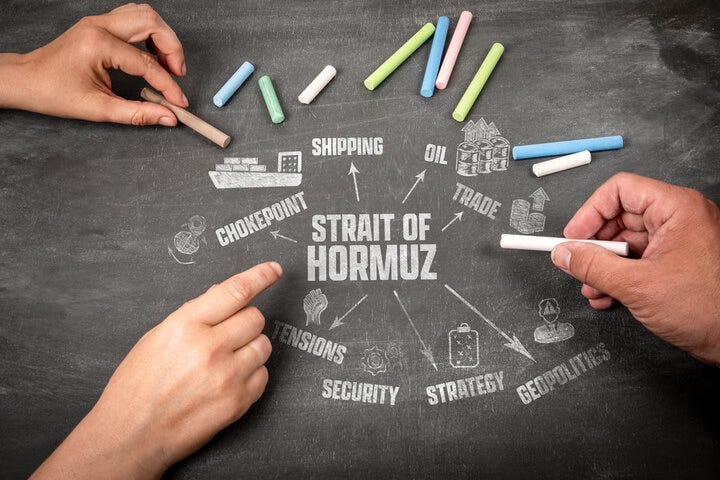
Viewed through the LICREPH framework, the past twenty years reveal a consistent structural trend.
Global energy demand expanded rapidly while maritime trade routes remained concentrated through a small number of vulnerable chokepoints (UNCTAD, 2026; EIA, 2026).
Infrastructure redundancy and geopolitical risk-sharing mechanisms failed to expand at the same pace (Oxford Economics, 2026; CSIS, 2026).
At the same time, the global economy increasingly relied on highly efficient just-in-time supply chains.
The resulting system operates extremely efficiently during stable periods.
But when geopolitical stress appears, it proves dangerously fragile.
Where business and policy go from here
For corporate boards, energy companies and policymakers, the strategic implications are clear.
The Hormuz crisis should not be treated as a temporary anomaly but as an early demonstration of the geopolitical operating environment likely to define the coming decade (CSIS, 2026; Alvarez & Marsal, 2026).
Three strategic adjustments follow.
First, organisations must re-price geographic exposure, distinguishing clearly between supply chains dependent on Hormuz and those that are not.
Second, governments and corporations must invest in true redundancy, including diversified energy sourcing, flexible refining capacity and expanded storage infrastructure.
Third, capital allocation decisions should incorporate geopolitical resilience stress-testing, including scenarios in which major maritime routes or insurance markets become unavailable for extended periods.
The current crisis is not an anomaly.
It is the visible outcome of decades of structural choices about how global energy systems were designed.
The question facing policymakers and industry leaders is therefore simple.
Do we continue rolling the dice, or begin redesigning the system that powers the global economy?
References
CSIS (2026) What Does the Iran War Mean for Global Energy Markets?
UNCTAD (2026) Strait of Hormuz Disruptions: Implications for Global Trade and Development
Oxford Institute for Energy Studies (2026) Disruption in the Strait of Hormuz
Alvarez & Marsal (2026) Navigating the 2026 Energy Crisis
EIA (2026) Strait of Hormuz Oil Transit Data
Kpler (2026) Strait of Hormuz Crisis and Global Oil Markets
Oxford Economics (2026) Iran and the Strait of Hormuz: Energy Market Risks
Bloomberg (2026) Insurance Clubs Halt War-Risk Cover in Persian Gulf
The Guardian (2026) Maritime insurers cancel war risk cover in Gulf
Washington Institute (2024) Houthi Shipping Attacks Analysis
UNAV (2024) Red Sea Shipping Disruptions
Al Jazeera (2021) Iran-China Strategic Agreement
https://www.aljazeera.com